
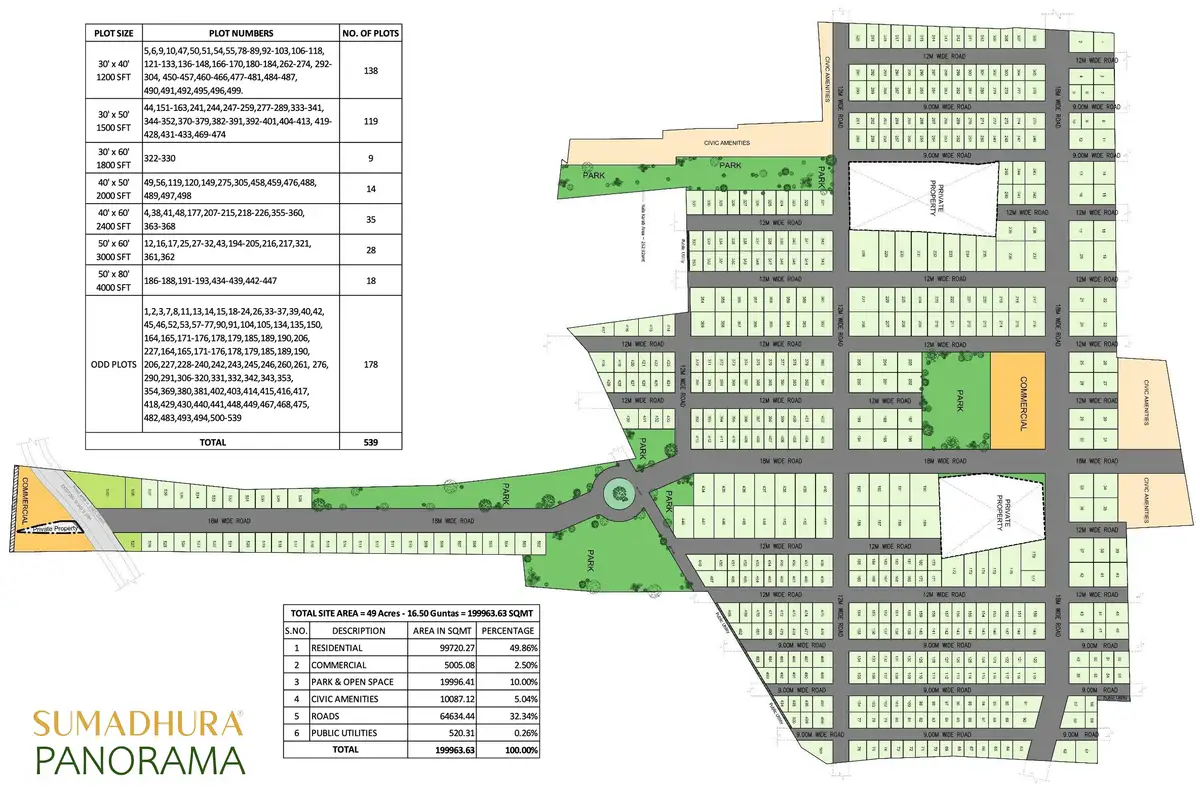
How to Read This Master Plan
A master plan is the most honest document a developer produces. Marketing copy can be vague. Brochures can be aspirational. But the layout drawing shows you exactly where every plot sits, how wide the roads are, where the amenities go, and how much of the total acreage is devoted to open space versus sellable plots.
Layout Logic
Sumadhura Panorama Phase 2's 80-acre layout is organised into plot clusters separated by landscaped avenues and parks. The internal road network follows a hierarchy - main avenues are wider (typically 40 to 60 feet), while internal lanes serving individual plot rows are narrower but still comfortable for two-way traffic. This hierarchy matters. Wide main roads mean better access for emergency vehicles, moving trucks, and visitors. Narrower internal roads mean less through-traffic past your front door.
The green zones aren't afterthoughts. Parks and open spaces are distributed across the layout rather than concentrated in one corner. This means no matter which plot you pick, you're within walking distance of a garden or a tree-lined path. The central amenity zone - clubhouse, sports courts, swimming pool - sits roughly in the middle, keeping travel distances short for residents on both ends of the development.
Picking the Right Plot
Not all plots in a layout are equal, even if the price per square foot is the same. Here's what to look for:
- Corner plots get two road-facing sides. More ventilation, more natural light, easier access. They usually command a premium.
- Park-facing plots offer a permanent view buffer. Nobody builds on the park, so your sight lines are protected.
- East-facing plots get morning sun in the living areas - a preference for many buyers in South India.
- Plots near the main entrance are convenient but noisier. Plots deeper inside the layout are quieter but mean a longer drive to the gate.
The plot sizes here - 30x40, 30x50, 40x50, and 40x60 - give you real architectural flexibility. A 30x40 plot can hold a two-storey, three-bedroom house with a small garden, while a 40x60 plot gives room for a detached home with a courtyard, covered parking, and setbacks on all sides.
Infrastructure Below the Surface
What you can't see on the master plan matters as much as what you can. Underground infrastructure - water supply lines, sewage connections, stormwater drains, electrical cabling - determines whether your built home functions smoothly or runs into problems. In approved plotted developments like this one, the developer is required to lay all primary infrastructure before handing over plots. The Karnataka RERA registration binds the developer to these commitments.
Before finalising a plot, ask for the infrastructure drawing - not just the plot layout. Confirm road specifications and drainage plans match what's shown in the Bangalore International Airport area development standards. Check the pricing page for cost details by plot size, or review the project overview for the full specification list.